
If Your Child Struggles with Focus, Sensory Overload, or Big Emotions, Nutrition Can Help
Learn simple, realistic ways to support your child’s brain so they can feel calmer, more focused, and easier to support each day.
If Your Child Struggles with Focus, Sensory Overload, or Big Emotions, Nutrition Can Help
Learn simple, realistic ways to support your child’s brain so they can feel calmer, more focused, and easier to support each day.
Is your child struggling with:

Inconsistent focus, impulsivity, or difficulty following through

Big emotional reactions that are hard to regulate or recover from

Anxiety, rigidity, or feeling easily overwhelmed
If this sounds familiar, you’re not alone. Even with the right supports in place, many parents feel stuck. The good news: small nutrition changes can support calmer days and smoother routines.
Neurodivergence & Kids
Neurodivergence refers to natural differences in how the brain develops and functions. It means a person’s brain processes information, attention, emotions, and sensory experiences differently.
In children, neurodivergence can show up in many ways. A child may experience the world more intensely, have strong interests, be sensitive to sounds, textures, or foods, learn or communicate differently, or struggle with attention, flexibility, or social interaction. Every neurodivergent child has their own unique pattern of strengths and challenges.
You Deserve Every Tool to Support Your Child
When your child is struggling, you look everywhere for answers, yet nutrition and lifestyle are often missing from the conversation. However, the research shows that nutrition plays an important role in emotional regulation, focus, energy, and sleep.
What Becomes Possible with the Right Nutrition
Greater emotional regulation
Improved focus and attention
More consistent energy throughout the day
Better sleep quality
Fewer mood swings
Increased comfort and regulation in the body
Stronger gut and digestive health
Reduced inflammation that can affect behavior
Improved comprehension and cognitive flexibility
A more resilient nervous system
Days that feel smoother and more predictable
When daily habits are aligned with what your child needs, progress feels possible again for the whole family.


Katherine Lawrence, BCAS
You do not have to figure this out alone.
I know what it feels like to sit on the floor in tears because nothing seems to be working and you don't know how to reach your own child.
That experience led me to take a deeper look at the research behind how nutrition and daily habits influence regulation, focus, and behavior in neurodivergent children. I later shared this work in a TEDx talk that resonated with hundreds of thousands of parents facing similar challenges.
For more than sixteen years, I’ve worked as a nutritionist supporting neurodivergent children and their families using practical, evidence-informed strategies that fit real life.
My advanced training through Stanford, Cornell, and Harvard, along with board certification as an autism specialist, allows me to translate complex research into clear, actionable guidance families can use at home.

A simple, realistic plan
1
Enroll in the Neurodivergent Masterclass
Learn the specific steps that support predictable moods, better focus, and more consistent emotional regulation.
2
Apply the practical steps at your own pace
Apply small, realistic upgrades that work with your child’s needs and daily rhythms.
3
Watch your child feel more regulated
As these changes take effect, daily life becomes smoother and progress becomes easier to see.
Enroll in The Neurodivergent Nutrition Masterclass for Kids
This masterclass breaks down the science of nutrition for neurodivergent kids into simple, doable steps you can apply at home. Each video lesson gives you clear guidance without the overwhelm, plus printable recipe cards, demos, and handouts. You can move at your own pace!
Inside the course, you’ll learn:
How nutrition affects emotional regulation, attention, energy levels, and sleep
The gut-brain connection and why it matters for mood and behavior
Common nutrient gaps that can impact focus and regulation
How blood sugar balance influences emotional and behavioral stability
Hydration strategies that support focus and emotional regulation
The role of ultra-processed foods and additives in brain function
How to support picky eaters, skipped meals, and inconsistent eating
Interoception, food memory, and why hunger cues don’t always work
Practical, realistic strategies families can use at home without pressure or perfection
Get 1-Year access to all 28 lessons plus printable recipe cards, demos, and handouts.
$297

This Masterclass is Right for You if
You’re looking for evidence-informed nutrition and lifestyle strategies to support a neurodivergent child
Your child experiences challenges with emotional regulation, attention, or reactivity
You want added support for your child alongside therapy, school, and behavioral supports

Not sure where to start?
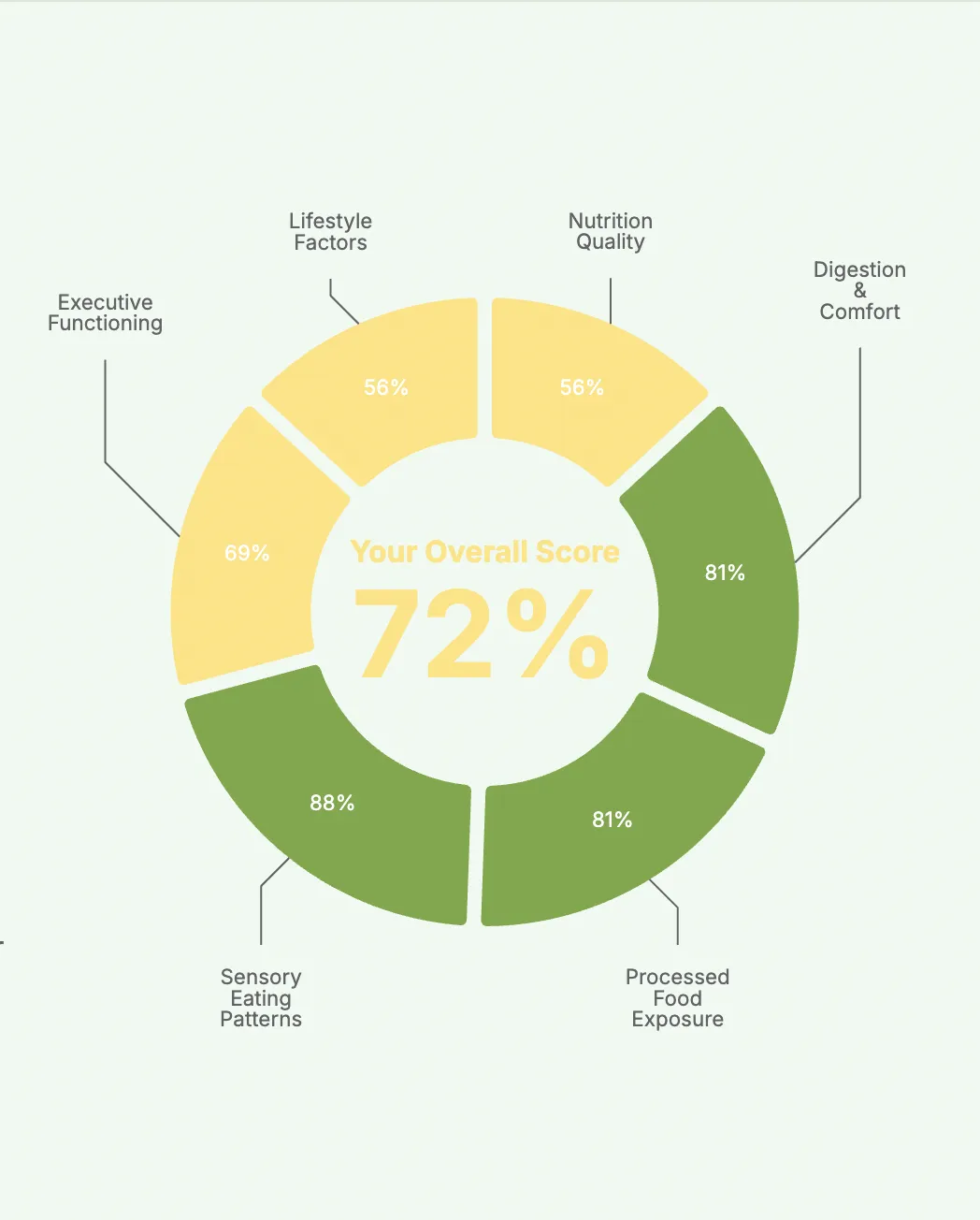
The Kids Neurodivergent Nutrition Assessment helps you understand what your child may be missing and where small changes can make the biggest difference.
Nutrient support
Gut–brain function
Processed food impact
Sensory and eating patterns
Emotional regulation signals
Daily rhythms like sleep, hydration, and movement
Your results show exactly where your child needs the most support so you can make targeted changes that bring real relief.
FAQs
Does this replace therapy or other professional support?
No. This masterclass is designed to support your child alongside therapy, school services, and medical care, not replace them. Nutrition and lifestyle are foundational supports that can help make other interventions more effective by improving regulation, focus, energy, and sleep.
What if my child is very selective with food?
This course was created with selective eaters in mind. We focus on realistic, pressure-free strategies that work with your child’s preferences, routines, and sensory needs. The goal is not perfection or forcing new foods, but small, supportive changes that add up over time.
How quickly do families see changes?
Every child is different. Some families notice small shifts in energy, sleep, or regulation within a few weeks, while others see gradual changes over a longer period. The course emphasizes consistency and patterns rather than quick fixes, and encourages observing changes without rigid expectations.
What ages is this for?
The strategies in this masterclass are designed for families with neurodivergent children from early childhood through the teen years. The principles also apply to adults, and many parents find the information helpful for themselves as well. However, the things you learn in this masterclass apply at any age.
I am already overwhelmed. Will this be too much?
No. This course is intentionally designed to reduce overwhelm, not add to it. The strategies are practical, flexible, and meant to fit into real life. You don’t need to do everything at once. Even one small change can make a meaningful difference.
Bring nutrition into the support plan
Designed to support the strategies you already use, with simple steps you can start right away.